Consortium for the Research of Artists‘ Materials Archives (CAMA)
Inhalt
Archives of artists’ material manufacturers preserve important material and written sources on the materiality of works of art, offering rich opportunities for future, multi-perspective research into the history of artists‘ material production during the industrial era (c. 1750 to the present day).
Funded by the German Research Foundation (Deutsche Forschungsgemeinschaft, DFG), the Consortium for the Research of Artists’ Materials Archives (CAMA) aims to foster collaboration between corporate and research partners to lay the foundation for a multi-perspective investigation of the history of modern European artists’ materials manufacturing (DFG project number 53724692, duration 2024–2027).
A total of five network meetings are conducted between 2024 and 2027, including in Düsseldorf, Cologne, Amsterdam, Hanover and Cambridge. The results will be communicated on the partners’ websites throughout the project and will be presented at a public, three-day symposium at ABK Stuttgart, to be held from 15–17 September 2027.
The network is open to expansion to include further company archives of European artists’ material manufacturers and their research partners.
Research Gaps and the Founding of the Project in 2022
Because of its materiality, modern and contemporary painting poses numerous new challenges for preservation, presentation, and interpretation. Until now, crucial gaps in art technological and conservation science research have been limited access to the archives of European artists’ material manufacturers and a lack of networking between relevant research disciplines. In 2022, the Restoration Centre Düsseldorf (Restaurierungszentrum Düsseldorf, RED), TH Köln – University of Applied Sciences (Technische Hochschule Köln), the ABK Stuttgart and the Cultural Heritage Agency of the Netherlands therefore founded the Consortium for the Research of Artists’ Materials Archives (CAMA) to develop multidisciplinary research initiatives and research strategies.[1] Since 2024, the German Research Foundation has been funding the project as a scientific network.
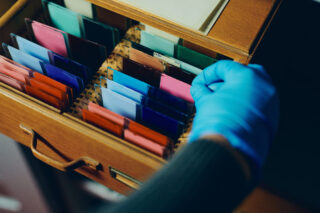
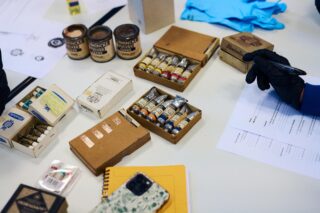
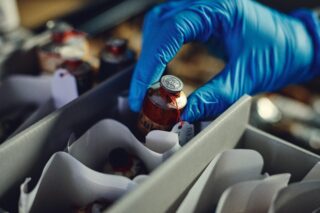
Extensive and crucial information for research into European artists’ paints lies hidden in the archives of artists’ material manufacturers. This includes recipe books, product samples, catalogues and correspondence with artists, among other things. These documents are an important key to understanding the materiality of modern painting. Until now, most of these archives have been subject to company confidentiality and have been only partially accessible to researchers. For the first time in the history of industrial European paint manufacturing, the network partners have now succeeded in laying the foundation for comprehensive collaboration, based on mutual trust, with a total of nine artists’ material manufacturers that have been among the European market leaders since their foundation in the 18th and 19th centuries respectively: the three German companies Schoenfeld/LUKAS (Düsseldorf; Bracknell (UK) since 2018; founded 1829), Schmincke (Erkrath, founded 1881) and Pelikan (Hanover, founded 1838); the Dutch company Royal Talens (Apeldoorn, founded 1899); the two British companies Winsor & Newton (founded 1832 in London) and Roberson & Co. (1820–1985); the Italian company Maimeri (founded 1923); the Belgian company Jacques BLOCKX fils s.a. (founded 1865); and the Norwegian company Alf Bjercke.
[1] Schwaderlapp, Vanessa; Holubec, Inken M; Heydenreich, Gunnar: Unlocking histories: The Schoenfeld/LUKAS archive and its potential for art technological research. In: J. Bridgland, International Council of Museums (ed.) Transcending Boundaries: Integrated Approaches to Conservation. ICOM-CC 19th Triennial Conference Preprints, Beijing, 17–21 May 2021. Paris (2021).
Van den Berg, Klaas Jan; Ferreira, Ester; Heydenreich, Gunnar; Holubec, Inken; Neugebauer, Wibke; Pause, Rika; Schwaderlapp, Vanessa; The Consortium for the Research of Artists’ Materials Archives (CAMA). In: J. Bridgland, International Council of Museums. Working Towards a Sustainable Past. ICOM-CC 20th Triennial Conference Preprints, Valencia, 18–22 September 2023. Paris (2023).
Aims of the CAMA Network
The network brings together existing and new research initiatives. It enables collaboration between leading art technology and conservation science research institutions, archives of renowned artists’ material manufacturers, and representatives of archival and information science as well as the digital humanities. A further aim is to devise a cross-archival research infrastructure and to develop a joint, multidisciplinary research strategy that will make it possible to examine the history of European artists’ material manufacturing from different disciplinary perspectives. Further research impulses will come from the disciplines of art history; economic, business and social history; the history of science and the history of materials; and the history of technology and industry. In doing so, the network pursues both a knowledge-generating and an application-oriented approach, for example with regard to questions of dating, authenticity and provenance research, and the development of new conservation methods.
CAMA Network Partners
Stuttgart State Academy of Art and Design (ABK Stuttgart), Prof. Dr. Wibke Neugebauer, Prof. Dr. Christoph Krekel
Centre for Research and Restoration of the Museums of France (Centre de recherche et de restauration des musées de France, C2RMF), Paris, Nathalie Balcar, Dr. Elisabeth Ravaud
Doerner Institut, Bavarian State Painting Collections, Munich (Doerner Institut der Bayerischen Staatsgemäldesammlungen München), Dr. Patrick Dietemann, Dr. Heike Stege
University of Applied Sciences Potsdam (Fachhochschule Potsdam), Prof. Dr. Felix Schäfer, Prof. Dr. Karin Schwarz
Society for Business History (Gesellschaft für Unternehmensgeschichte, GUG), Frankfurt, Dr. Kai Balazs-Bartesch
Hamilton Kerr Institute at the Fitzwilliam Museum, Prof. Dr. Erma Hermens, Dr. Sally Woodcock
H. Schmincke & Co. GmbH & Co. KG, Heiko Alzer, René Schäffer
LMU Munich (Ludwig-Maximilians-Universität München), Institute of Art History (Institut für Kunstgeschichte), Prof. Dr. Matthias Krüger
Museum of Cultural History, University of Oslo, Dr. Hartmut Kutzke
NOVA School of Science and Technology, Lisbon, Dr. Vanessa Otero
Paris Lodron University of Salzburg (Paris Lodron Universität Salzburg), Prof. Dr. Sebastian Haumann
Pelikan Vertriebsgesellschaft mbH & Co. KG, Wilfried Leuthold
Restoration Centre Düsseldorf (Restaurierungszentrum Düsseldorf, RED), Inken Maria Holubec
Royal Talens, Daphne van Mansom
Tate Modern, London, Dr. Bronwyn Ormsby, Dr. Judith Lee
TH Köln – University of Applied Sciences (Technische Hochschule Köln), Cologne Institute of Conservation Sciences (CICS), Prof. Dr. Gunnar Heydenreich, Dr. Doris Oltrogge, Sarah Critchley
The Cultural Heritage Agency of the Netherlands and University of Amsterdam, Prof. Dr. Klaas Jan van den Berg, Dr. Rika Pause
The Norwegian Institute for Cultural Heritage Research (NIKU), Barbro Wedvik
University of Cologne (Universität zu Köln), Prof. Dr. Øyvind Eide
University of Liège (Université de Liège) and Royal Museums of Fine Arts of Belgium (Musées royaux des Beaux-Arts de Belgique), Prof. Dr. David Strivay, Dr. Catherine Defeyt
University of Pisa, Dr. Ilaria Bonaduce
Prof. Em. Dr. Leslie Carlyle
Dr. Wolfgang Müller (former head of laboratory at Schmincke and LUKAS)
Ingo Sprenger (former head of laboratory at LUKAS)
In addition to the permanent network partners listed above, the network also includes early-career researchers (MA and PhD students).
The network is open to expansion to include further company archives of European artists’ material manufacturers and their research partners.
1st CAMA meeting at the LUKAS Archive / RED in Düsseldorf (June 13–14, 2024)
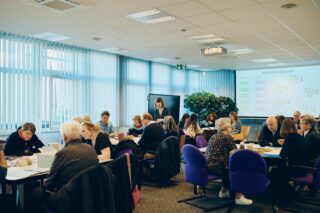
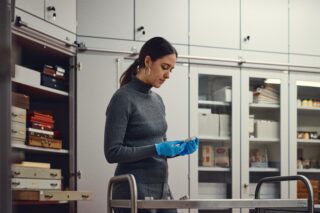
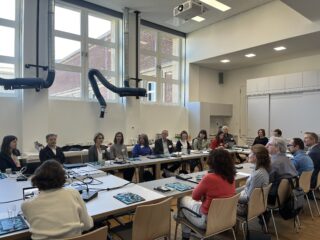
The kick-off meeting took place at the Restoration Centre Düsseldorf (RED), which has housed the company archive of the long-established artists’ paint manufacturer LUKAS since 2018. Thirty-three participants from eight European countries exchanged views on the status quo in the participating archives, the preliminary work of the individual network members and possible next steps in developing a research strategy and a suitable research infrastructure.
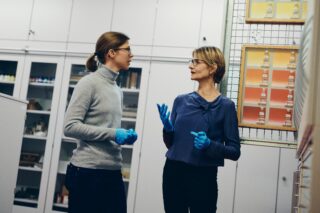
Particularly enriching were the guided tours of the LUKAS archive and the associated experiences and impressions from the practice of paint manufacturing, which former and current employees contributed to the discussions. We would like to thank Director Joanna Phillips and the team at the Restoration Centre – above all Inken Maria Holubec – for the excellent organisation!
2nd CAMA meeting at Schmincke and TH Köln (March 10–11, 2025)
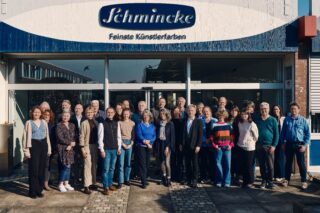
Over two days, 36 participants from various disciplines were guests first at Schmincke in Erkrath and then at the CICS of TH Köln, to jointly explore in greater depth the questions raised at the first CAMA meeting in Düsseldorf.
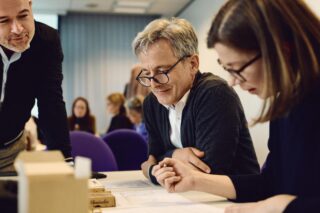
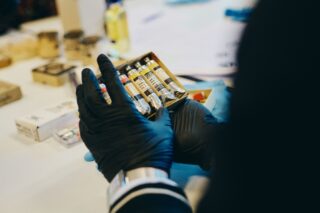
The first day was devoted entirely to artists’ paint production and the associated archive at Schmincke: after a tour of the current production facilities, the afternoon focused on the history of the company and the development of the company archive. Several presentations explored, from different disciplinary perspectives, the questions of what value such a company archive can have today for the companies themselves and for researchers from various disciplines, which questions such an archive can answer, and how the information it contains can be catalogued and made usable. A specially designed workshop with a variety of archival materials aimed to make participants aware of the manifold challenges and questions involved in handling these materials – for example concerning their precise dating – which must be considered and gradually resolved, both as a basis for future research and for the conception of a digital infrastructure. By the end of the first day, a well-rounded picture had thus emerged, which on the one hand showed the rich treasure trove of archival materials in the context of their creation, but also revealed the manifold challenges involved in handling them.
The second day at TH Köln focused, firstly, on an overview of ongoing research by the various network partners as a starting point for developing joint research questions. Secondly, participants discussed the central question of whether and how the information in the archives could in future be structured and linked within a digital infrastructure, so that cross-archival research questions can also be addressed, and which different approaches to cataloguing and digitisation already exist in the archives.
In the morning, the network participants first presented their current research, which is being carried out in cooperation with the various archives. The broad spectrum of research approaches represented – from art technology and conservation science, art history, digital humanities, archival and information science, and business history – as well as the close contact with the companies and their current and former employees, proves to be an invaluable potential for a comprehensive understanding of the archival holdings: the diversity of the disciplines involved is reflected in the wide range of research questions and their respective specific methodologies, which are usefully complemented by experience from the practice of paint manufacturing. At the same time, however, this diversity also poses a central challenge in coordinating future research on the archives: developing a joint research strategy will be the task of the forthcoming network meetings.
The afternoon of the second day was dedicated to the topic of ‘digital infrastructure’: using two examples – Winsor & Newton and LUKAS – participants discussed how, and in what form, the information in the archives could be digitally catalogued and made accessible. Here, too, a wide range of tasks emerged that will be addressed at the next network meetings. These include, for example, the development of a standardised, cross-archival terminology for the different types of objects and sources, a categorisation of the objects and the definition of relevant metadata. For cross-archival research, it is also important to assign the various types of sources in the archives to the different work and production steps in manufacturing, in order to systematise them according to their original function and content, and thus to lay a sound foundation for future cross-archival, comparative research projects.
In the run-up to the next network meeting, these questions will be worked on in small, interdisciplinary working groups for the individual companies and archives; the results will then be brought together and discussed at the meeting.
The second CAMA meeting would not have been possible without the joint planning of the content and the organisational preparation with Gunnar Heydenreich, Sarah Critchley, Laura Gras, Doris Oltrogge (all TH Köln), as well as Markus Baumgart, Heiko Alzer, Susanne Goch and Simona Ludwig of Schmincke, and Wolfgang Müller. On behalf of the entire network, we would like to extend our warmest thanks for their hospitality!
3rd CAMA meeting at Royal Talens in Apeldoorn and at the RCE in Amsterdam (December 11–12, 2025)
On 11 and 12 December 2025, the CAMA network met in the Netherlands: first at Royal Talens in Apeldoorn, then at the Rijksdienst voor het Cultureel Erfgoed (RCE) in Amsterdam. Thirty participants gathered in person, joined on the second day by online participants. The focus of this meeting was on continuing two tasks from previous meetings: fleshing out a shared research perspective and clarifying key elements of a cross-archive digital infrastructure.
The first day at Royal Talens began with an overview of the company’s history, from its foundation by Marten Talens to its current affiliation with Sakura Color Products, followed by a guided tour of the archive and the production facilities.
The archive comprises, amongst other things, paint tubes, recipe books, business documents, catalogues and company magazines. The long-standing collaboration between Talens and the RCE demonstrated how such sources can be used for material identification, dating and historical research.
The guided tours were followed by two keynote speeches: the first addressed the role of the RCE in researching and safeguarding at-risk collections outside museums, including corporate archives, in the Netherlands. The second focused on the methods and pitfalls of transdisciplinary research. Network partners then gave short presentations on ongoing research, digitisation, database and inventory projects. The concluding discussion focused on how research findings can be documented and consolidated in the archives, and what rules should apply regarding access and citation.
On the second day at RCE in Amsterdam, participants categorised the research topics presented so far into eight overarching research fields. In breakout groups, stakeholders, potential, challenges and gaps in expertise within these fields were identified and discussed. Above all, the tension between the research community’s interest in open access and the protection of sensitive corporate information became clear. The experiential knowledge of former employees is considered time-sensitive and could be preserved, for example, through oral history interviews.
A vote identified four key areas for future research:
- Company history and products
- Links between archive holdings, artists and works of art
- A suitable research and archival infrastructure
- Data modelling as part of a joint research strategy
In the afternoon, the partners presented their experiences with a shared classification scheme for categorising archival materials. They had applied it as a ‘homework assignment’ to the archives of LUKAS, Schmincke, Pelikan, Blockx, Talens and Alf Bjercke. The scheme proved its worth as a tool for gaining an overview and making comparisons between categories of objects in the archives, but also highlighted the need for defined categories and a shared terminology (controlled vocabulary). Two keynote presentations explored this in greater depth. The first demonstrated that a shared archive catalogue first requires a defined core set of metadata before more complex search functions can be developed. The second emphasised that data modelling is never neutral, but depends on the questions CAMA aims to answer. In a concluding group exercise, specific research questions were linked to the necessary source types, metadata and functions of a digital infrastructure.
To continue the work until the next meeting, three working groups were formed:
- Guidelines for the physical storage of archival materials
- A shared vocabulary and a core metadata set
- CAMA mission statement
Greater visibility for the network was identified as a further priority, for example through a dedicated website.
We would like to extend our sincere thanks to Royal Talens and the RCE, in particular to Daphne van Mansom, Coos van Waas, Rika Pause and Klaas Jan van den Berg, for their hospitality and excellent organisation!
4th CAMA meeting at Pelikan in Hanover (July 2–3, 2026)
In early July 2026, the CAMA network met in the historic Pelikan quarter in Hanover. The TintenTurm there houses the archive of the Pelikan / Günther Wagner company, which was founded in 1838. Twenty-five participants took stock of progress at the fourth of a total of five meetings of the DFG-funded network.
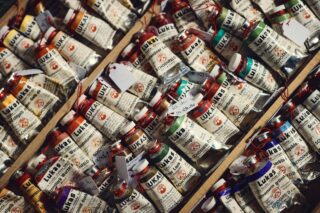
On the first day, the CAMA working groups presented their findings: the ‘Physical Storage’ working group has begun to statistically record the composition of the participating archives and make the data comparable. This revealed where the greatest challenges lie: in the large volume and heterogeneity of the archived materials, which raise questions regarding the handling of hazardous substances, the storage of leaking oil paint tubes, evaporating solvents, and corroding or disintegrating containers. The discussion on the mission statement centred on how CAMA can communicate its benefits to businesses, archivists and researchers alike. Network partners then presented their ongoing projects.
In the afternoon, the focus was on Pelikan’s company history and its associated archive. The Pelikan archive is particularly rich in business and marketing documents, as well as a collection of historical photographs documenting production from the 1860s right through to the mid-20th century. Guided tours of the archive in the TintenTurm and the historic Pelikan quarter, as well as a workshop on selected archival materials, rounded off the day.
The second day was devoted to data modelling for a shared infrastructure. A multi-level cataloguing model is intended to combine flexibility for the individual archives with shared standards. Working in breakout groups, the participants developed initial shared controlled vocabularies for four categories: object types, document types, context of creation and CAMA keywords. Interoperability with international standards such as the Getty vocabularies and LIDO was also discussed.
In the afternoon, a World Café session was held to further develop joint research ideas and discuss funding opportunities for the period after 2027.
We would like to extend our sincere thanks to Pelikan and to everyone who helped prepare the meeting, both in terms of content and organisation, in particular Wilfried Leuthold and Ilana Finkelstein, who opened the archive in the TintenTurm to us and prepared the workshop using selected archival materials. Thank you very much for your hospitality!
5th CAMA meeting at Hamilton Kerr Institute Cambridge and Tate London (December 2–4, 2026)
The fifth CAMA network meeting will take place at the Hamilton Kerr Institute and Cambridge and at Tate London from 2 to 4 December 2026. It will focus on preparations for the network’s final symposium, the next networking phase after 2027 and on preparing funding applications. Furthermore, the meeting will focus on the storage, preventative conservation and conservation of heterogeneous archival collections.
Project Organisation
Prof. Dr. Wibke Neugebauer, ABK Stuttgart
Prof. Dr. Gunnar Heydenreich, CICS, TH Köln
Inken Maria Holubec, RED Restoration Centre Düsseldorf
Klaas Jan van den Berg, Cultural Heritage Agency of the Netherlands; University of Amsterdam
Project Management
Prof. Dr. Wibke Neugebauer, ABK Stuttgart
Prof. Dr. Gunnar Heydenreich, CICS, TH Köln gunnar.heydenreich@th-koeln.de