Art Education
Inhalt
The Art Education programme prepares students for the varied and demanding career as a secondary school teacher specialising in Art. The teacher training programme is structured in two stages. It comprises a Bachelor’s phase, which focuses primarily on subject-specific knowledge, and a Master’s phase tailored to pedagogical aspects.
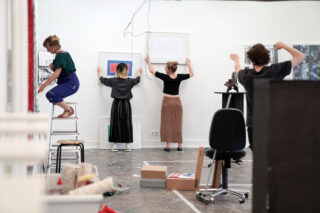
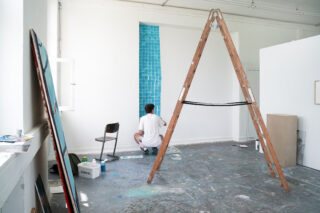
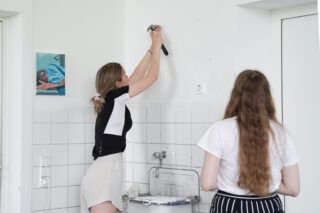
As with a degree in Fine Art, the Art Education programme is characterised by independent artistic work in the classroom. The development of one’s own artistic identity is at the heart of the programme, which, in conjunction with subject-specific teaching methodology, educational theory and school placements, forms the basis for future lesson planning in schools.
As an alternative to a second academic subject (e.g. German or Mathematics), students on the Art Education Programme may choose Intermedia Art (IMG). The combination of Fine Art and IMG as a second artistic-academic major is therefore aimed at those who wish to focus entirely on teaching art at grammar schools.
Course projects
Classes and professorships
Bachelor of Fine Arts
Duration and degree
| Duration of study | Standard period of study 8 semesters |
|---|---|
| Degree | B.F.A. (Bachelor of Fine Arts) |
Course content
The Bachelor’s degree programme in Art Education lasts four years. It comprises a first major in Fine Art (8 semesters) combined with a second academic major (6 semesters) at one of the partner universities. As an alternative to the academic major, the ABK Stuttgart offers the artistic-academic major in Intermedia Art (IMG programme) following the successful completion of a separate aptitude test. The Master’s degree (M.Ed.) is a prerequisite for the teaching traineeship.
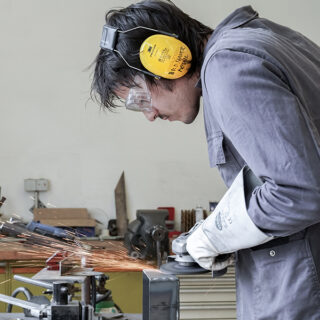
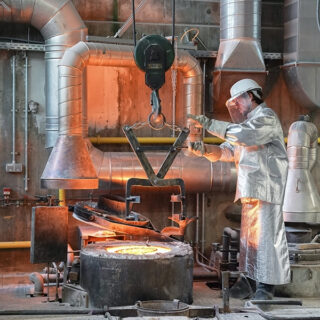
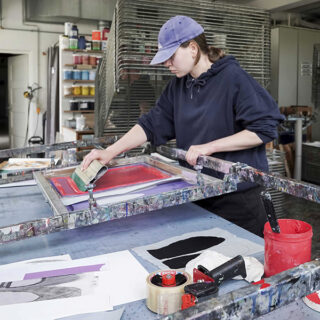
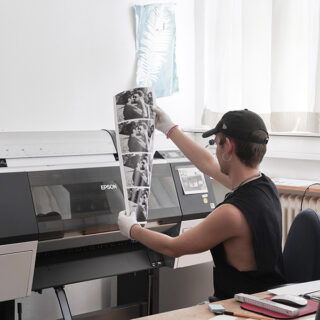
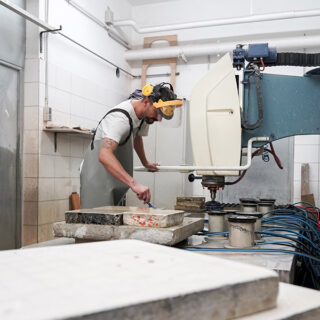
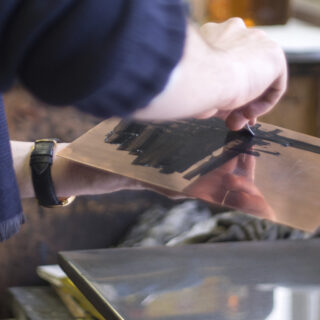
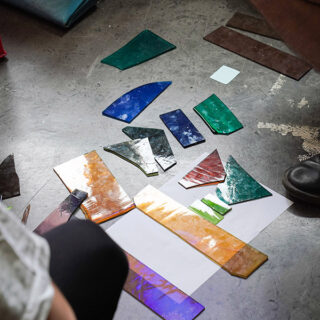
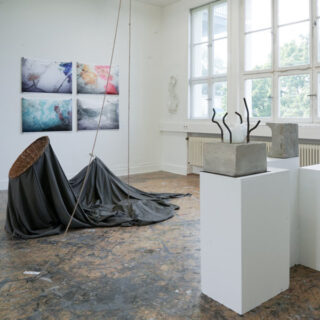
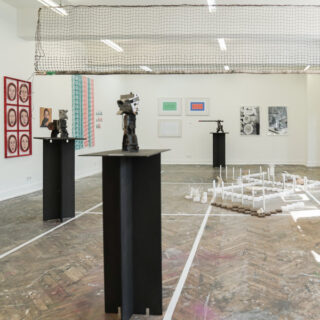
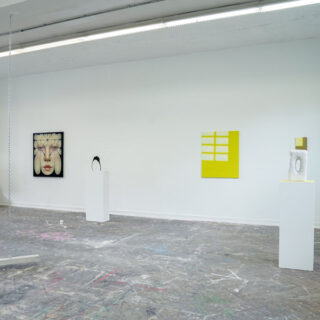
The Bachelor’s programme focuses on the development of students’ own artistic and practical work. Combined with studies in art history and theory, and the applied arts components included in the curriculum, this fosters an interdisciplinary and broad-based artistic identity. The exceptionally large number of workshops and laboratories plays a central role in this artistic training.
Students on the Art Education degree programme study alongside students on the Fine Art degree programme in the foundation and specialised classes.
New regulations for first-year students from the 2026/27 winter term onwards
From the 2026/27 winter semester onwards, new conditions will apply to all first-year students on the B.F.A. in Art Education (and the Diplom degree in Fine Art), relating to the Study and Examination Regulations (SPO), the Module Handbook (MHB) and the study programme plan. In Art Studies, the compulsory and marked modules ‘KW!-1’ and ‘KW!-2’ (Basic Concepts of Art) have been introduced. These must be completed in the Art Education degree programme prior to the oral examination in Art Studies and are a prerequisite for admission to this examination. Further details can be found in the relevant documents, which come into effect from the 2026/27 winter semester (see Regulations).
Procedure
Unlike the M.Ed., the B.F.A. focuses on the subject-specific content of teacher training. Its emphasis is on the study of the two main subjects. The academic major at a partner university, or alternatively the artistic-academic major in Intermedia Art (IMG) offered at the ABK Stuttgart, comprises a total of 78 ECTS (6 semesters), whilst the artistic major at the ABK is more extensive, comprising 138 ECTS (8 semesters). In addition to the subject-specific components, the Bachelor’s programme also includes a supplementary course in educational studies (including an orientation placement), comprising a total of 18 ECTS. Together with the Bachelor’s thesis, this results in a B.F.A. totalling 240 ECTS.
The cornerstones of the Art Education programme are the Fine Art modules, each of which spans one academic year (winter and summer semesters) and is undertaken in classes: in the first year of study, students attend a foundation class for General Artistic Education, followed by a specialised class, the profile of which is generally based on the discipline of the professor who heads the class. It is possible to change specialist classes during the course. The compulsory practical art modules in the foundation and specialist classes also include modules from the fields of architecture and design.
Alongside art practice, the range of courses in art studies and theory forms an essential part of the Bachelor’s programme and culminates in a compulsory oral module examination in art studies. In the compulsory-elective section, students may choose modules from the wide range of options available in art practice, art studies and the applied arts.
In addition to subject-specific training in the main subject of Fine Art, the Art Education degree programme (B.F.A.) also includes artistic subject didactics and modules in educational science. On the one hand, the three-week orientation placement at a grammar school is prepared for and followed up on accordingly; on the other hand, the personal skills of the trainee teachers in the subject of Art are reflected upon and honed in line with the demands of the teaching profession in schools.
Regulations
Regulations for commencing studies before the 2026/27 winter term
Regulations for students commencing their studies from the 2026/27 winter term
Master of Education
Duration and degree
| Duration of study | Standard period of study 4 semesters |
|---|---|
| Degree | M.Ed. (Master of Education) |
Course content
The Master’s programme comprises subject-specific modules in the first and second main subjects (22 ECTS each), subject didactics (9 ECTS each), the accompanying programme in educational science (27 ECTS) and the practical placement at a grammar school (16 ECTS). Including the Master’s thesis, this results in an M.Ed. totalling 120 ECTS.
In contrast to the B.F.A., the M.Ed. focuses on pedagogical content and, in addition to courses in subject-specific didactics and educational science, also includes a practical placement at a grammar school, which is prepared from a school-based perspective by the Department of Teacher Education and followed up by the ABK Stuttgart. Alongside theory-based and practice-oriented concepts and methods for lesson planning and the reflection on teaching and learning processes, topics such as inclusion, heterogeneity and diversity in relation to social inequality, migration, etc. are also covered.
On the M.Ed. programme, students study Fine Art as their first major subject with a specialisation, choosing between Art Practice, Art Studies and Art Pedagogy. The Master’s dissertation is then written in one of these specialisations. The Master’s degree may also be obtained in a second major subject (a university subject or IMG).
Only a Master of Education (M.Ed.) degree gives graduates access to the teacher training programme (Referendariat) at a grammar school.
Procedure
Once the entrance examination has been passed, the Master’s programme can be started in either the winter or summer semester, although it is recommended that students begin in the winter semester. A key element of the M.Ed. programme is the 12-week teaching placement at secondary schools, which is supported by preparatory and follow-up theory modules. For students starting in the winter semester, the teaching placement takes place in the third semester of the Master’s programme; for those starting in the summer semester, it takes place in the second.
The subject-specific modules of the M.Ed. in Fine Art as a major subject are undertaken, as an option, in the areas of art practice, art history or subject didactics. As entry to the Art Education degree programme in Baden-Württemberg is only possible at the start of the academic year, it is recommended that students complete the M.Ed. in the summer semester.
Regulations
You can view the exam registration period for the current semester on the Examinations Office’s website.
Subject combinations
At the ABK Stuttgart
First major subject: Fine Art and, where applicable, a second artistic-academic major subject: Intermedia Art (IMG)
At the partner universities Stuttgart, Hohenheim und Tübingen
Second main academic subject, such as Biology; the following subject combinations can be combined with the University of Stuttgart: Biology, Chemistry, German, English, French, Geography, History, Greek, Computer Science, Italian, Latin, Mathematics, Philosophy/Ethics, Physics, Political Science, Russian, Spanish, Physical Education, Theology (Protestant/Roman Catholic) and Economics.
Please note: Be sure to check the application deadlines and any entry requirements for certain main subjects at the partner universities!
Intermedial Art (IMG)
In the Art Education degree programme, the subject of Intermedia Art (IMG) offers an alternative to the second academic subject (e.g. Mathematics or German) at a partner university. The combination of Fine Art and IMG as a second artistic-academic major is therefore aimed at those who wish to focus entirely on teaching art at grammar schools. The two main subjects, Fine Art and IMG, are studied in parallel at the ABK Stuttgart.
This model (the option of choosing IMG as a second artistic-academic major instead of a scientific subject) is specific to the state of Baden-Württemberg and applies exclusively there.
For detailed information on this, see the ‘Intermedia Design’ specialisation.