



Textile Design
Inhalt
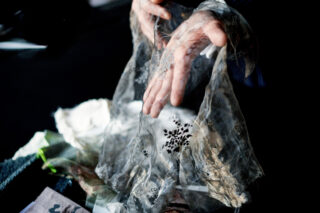
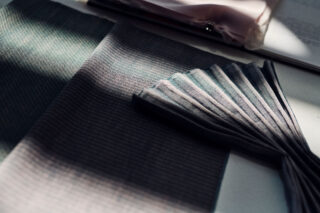
The Textile Design degree programme is an independent and rigorous artistic and design-oriented course of study that is structured into a foundation phase and a main phase, including a work placement and a final dissertation. The (interdisciplinary) formats on offer range from design projects with a thematic focus on materials, techniques or context, through to project-accompanying seminars with structural content, the acquisition of textile construction and finishing techniques, courses on specific software, workshops on specific techniques and tools, through to discussion groups, joint practical sessions and collaborative projects with industry and research institutes, right up to exhibitions, publications and symposia that are jointly conceived and realised.
Graduates of the programme are highly qualified designers who possess excellent technical (textile), artistic and conceptual skills, as well as independent creative perspectives and aesthetic forms of expression. The creative field of work for textile designers spans the areas of fashion and clothing, interiors and interior design, product materials and mobility (‘Colour & Trim’). Career opportunities range from setting up one’s own design studio to exciting roles in a textile research institute or a medium-sized textile company, right through to positions in large corporations. The career prospects are therefore very diverse.
Translated with DeepL.com (free version)
An dieser Stelle ist ein externer Inhalt von Vimeo eingebunden. Durch das Ansehen des Inhalts hat der externe Anbieter Zugriff auf Ihre Daten. Weitere Informationen finden Sie in unseren Datenschutzhinweisen.
Student research projects
Duration and degree
| Duration of study | Standard period of study 9 semesters |
|---|---|
| Degree | Diploma |
Course content
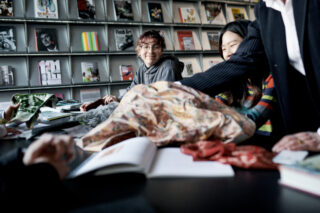
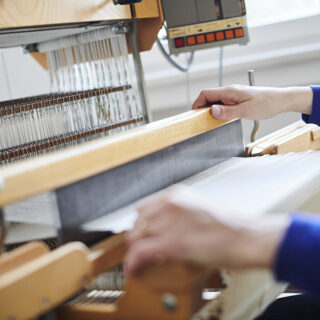
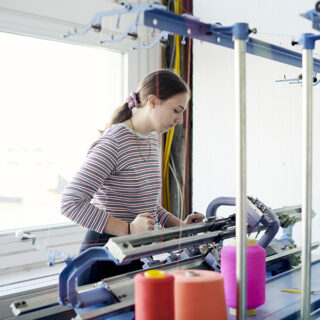
The textile design course at the ABK Stuttgart is integrated into a wider range of other artistic and design degree programmes. This distinctive feature makes studying at the ABK a unique experience and sets it apart from design courses at other universities. Teaching takes place in small groups with excellent supervision, and the workshops and laboratories play a central role in the artistic training.
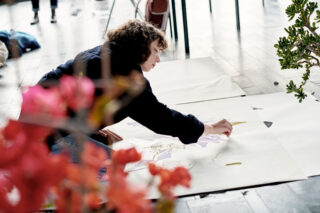
Creative expertise and design proficiency are primarily acquired through varied and continuous practice. In the textile design programme, the fundamental method of teaching is therefore design work in the form of projects. Key technical, craft-related and methodological skills are taught under guidance in seminars and practical sessions; independent development and experimentation in the workshops and studios are facilitated with professional support; and the ability to engage in critical discourse is tested and honed through presentations and colloquia. Complementary aspects are explored both through the university’s own interdisciplinary programmes and through collaborations with research institutes, cultural organisations and the textile industry.
During the first four semesters of the basic studies, the focus is on acquiring and internalising the general practical and theoretical foundations of textile design. Building on this, the advanced studies focus increasingly on deepening and broadening the creative repertoire, as well as on developing and refining students’ own creative profiles. Through process-oriented project work, aesthetics and application, form and function, concept and context, tactile qualities and craftsmanship, and technology and textiles are developed and realised not in isolation from one another, but as interlinked elements. A reflective engagement with socially relevant issues is reflected in consistent, aesthetic and impactful textile design.
A compulsory four-month work placement forms part of the degree programme.
Regulations
Workshops
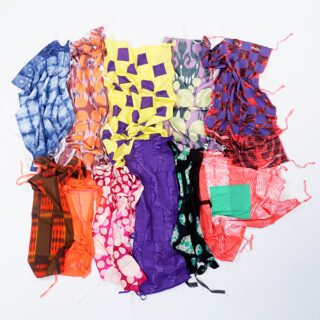
Research
News
Staff
Professors

Academic associates


Artistic-technical teachers


Lecturers
- Dr. phil. Julia Burde, History of Textiles and Fashion
- Francesco Collura, knitting guidance
- Jutta Hüneke, Nature studies and decorative fabric design www.juttahueneke.de
- Lenka Kühnértova, Photoshop and Illustrator www.kuehnertova.de
- Horst Mayer, Introduction to Knitting Techniques
- Stefanie Mühlig, Introductory Course InDesign
- Julia Scheyrer, Knitting design
- Sarah Schrof, Theory of Colour www.editru.de
- as well as, amongst others, Stéphanie Baechler, Janina Bieberstein, Paula van Brummelen, Carl-Philipp Clarenbach, Velia Dietz, Robert Haselbacher, Julia Heuer, Alexa Kuzuhara, Andreas Langen
