Conservation of Time Based Media
Inhalt
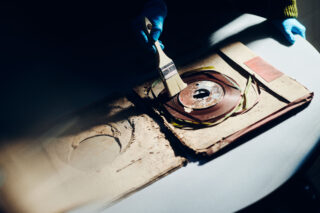
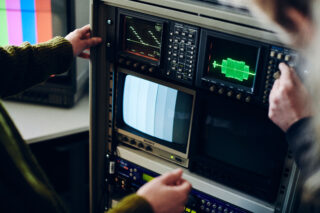
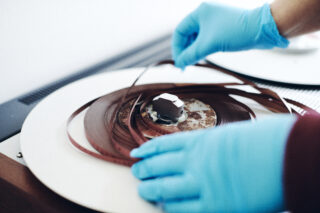
How can audiovisual cultural heritage be preserved in the long term and made accessible to future generations? This question lies at the heart of the degree programme in Conservation and Restoration of New Media and Digital Information. The programme focuses on the preservation of audiovisual cultural heritage and addresses these challenges in a unique way by imparting sound theoretical knowledge in close conjunction with practical work.
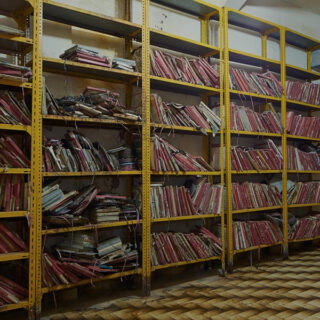
Across the globe, there are thousands of kilometres of shelving containing magnetic tapes, film canisters, photographic collections, and video and audio media in a wide variety of forms and materials, all of which need to be preserved, protected and made digitally accessible. The preservation of media art and digitally generated data, as well as the safeguarding of tangible and intangible cultural heritage on audiovisual media, requires comprehensive knowledge of the various recording processes, materials and technologies, as well as a high level of expertise in transferring them to future-proof formats. As the media and their environments are products of their respective technological eras, they often become obsolete as a result of technical advancements. This gives rise to the need for complex preservation measures for the media and their environments.
The degree programme has excellent national and international networks and maintains links with numerous institutions both at home and abroad. Through the publication of research projects, the development of an extensive collection of historical instruments and a specialist library, it makes an important contribution to this constantly evolving field.
News

Outline of the profession
Media conservators are dedicated to a highly topical, wide-ranging and fascinating field: the preservation of audiovisual media in all their diverse forms. They document the current condition of media artworks, damaged media, and analogue and digital collections. They investigate the material properties of the plastics used and their specific ageing processes. They develop strategies for the long-term preservation of the originals and for their transfer to the digital realm. Through appropriate digitisation and metadata processing, they make content discoverable and ensure that media and time-based artworks remain accessible and can be experienced in both analogue and digital formats for future generations. They preserve the audiovisual cultural heritage for future generations.
Many museums, archives, libraries and collections around the world require specialists to ensure the preservation of their vast collections of audiovisual media. What makes this role unique is that audiovisual media generally cannot be accessed without suitable playback technology: whilst a picture, a photograph or even a moving film strip can still be viewed with the naked eye and thus reveal its information, complex media require suitable playback devices or the appropriate hardware and software in order to be used. This results in a broad spectrum that makes the profession unique and particularly diverse: the combination of media and equipment technology, physical restoration, preservation, maintenance and optimisation of playback technology, the long-term preservation of digital data, and the wide field of digital restoration.
Media conservators are employed by public and private clients or work on a freelance basis. They undertake planning and coordination tasks, such as assessing collections, as well as the practical implementation of archiving and digitisation projects. They possess the key competence required to install and preserve complex media art in museums or exhibitions. The wide range of specialisation options on offer, the extensive practical work and the links with the media artists working on site are unique to the ABK Stuttgart.
The opportunity to pursue a PhD also opens up a path into research and teaching for Master’s graduates.
Bachelor’s degree
Duration and degree
| Duration of study | Standard period of study 6 semesters |
|---|---|
| Degree | B.A. (Bachelor of Arts) |
| ECTS | 180 |
Course content
The Bachelor’s programme provides a comprehensive grounding in the theory and practice of media restoration, with a focus on the preventive conservation of cultural objects: this involves being able to identify the diverse formats and materials of media, understanding their specific storage requirements, and ensuring their longevity and playability for as long as possible through appropriate conservation and restoration measures. Inventory and documentation are central to this process.
On the other hand, there are the technical requirements necessary for the digitisation and long-term preservation of digital data. Knowledge of the relevant technology, as well as the professional maintenance and preservation of playback equipment from all eras, forms the basis for the digitisation of the media. Data and works of art that already exist in digital form must be catalogued and transferred to a robust archival environment that ensures they can be accessed and retrieved in the future. Knowledge of databases and metadata is an important foundation in this regard.
Hinzu kommen die vielfältigen Aspekte der Präsentation audiovisueller Medien in Ausstellungen und Publikationen, etwa als analoge Videoinstallation, als digitales Kunstwerk oder als Dokument vergangener Kulturen und Ereignisse. Schließlich vermittelt das Bachelorstudium die ethischen und ästhetischen Werte, die für ein so breites Tätigkeitsfeld erforderlich sind.
The contents at a glance:
- Analogue and digital image and sound technologies
- Media and Art History
- Archival and Library Services
- Applied Natural Sciences
- Photography
- Long-term preservation and integrity of digital data
- Technology and the digitisation of AV media
- Time-based media
- Equipment maintenance and servicing
- Fundamentals of Electronics
- Preventative Conservation Digital Restoration
- Conservation Ethiks
- Media and exhibition technology
- Computer Technology
- Computer Science
- Museology
- Netart
- Streaming Media
- Gameculture
- Virtual Reality & 3D
Field trips at home and abroad reinforce the course content.
Bachelor’s thesis and final examination
The Bachelor’s degree programme concludes with a four-month Bachelor’s thesis and a final examination, and corresponds to Level 6 of the ‘Professional Guidelines’ of the European umbrella organisation ‘European Confederation of Conservator-Restorers Organisations (ECCO)’ (ecco-eu.org).
The Bachelor’s degree qualifies graduates to progress to a Master’s programme in conservation and restoration with the same subject focus.
Regulations
Master
Duration and degree
| Duration of study | Standard period of study 4 semesters |
|---|---|
| Degree | M.A. (Master of Arts) |
| ECTS | 120 |
Course content
The Master’s programme builds on the skills acquired during the Bachelor’s programme and specifically deepens the fundamental knowledge gained there, with a view to imparting the specialist expertise required for future independent professional practice. The programme introduces students to the latest research and equips them to develop and carry out complex conservation and restoration projects.
The Master’s programme is characterised by a wide range of options and a high degree of academic freedom: students can choose from a variety of block courses in the fields of materials science, conservation science and modern subjects in contemporary art, selecting those that interest them most and thus developing their own academic profile (see the Module Handbook under ‘Regulations’).
Master’s thesis
The Master’s programme culminates in a six-month Master’s thesis. Upon successful completion, students will have acquired the skills and competencies set out at Level 7 of the E.C.C.O Professional Guidelines (ecco-eu.org). The M.A. degree qualifies you to practise the profession independently and to pursue a PhD.
Regulations
Course projects
Chair, Miriam; Hilbig, Paula; Bai, Hao; Bergalevich, Anastasija. Reinigung, bestandserhaltende Maßnahmen und Digitalisierung eines Fotoalbums mit historischen Abzügen aus den Jahren 1910-1930. Dachbodenfund, Privatbesitz. Wien/ Ebreichsdorf. Projektarbeit, 2024.
Chair, Miriam; Hilbig, Paula; Bai, Hao; Bergalevich, Anastasija. Fotografischer Nachlass Theodor Walz. Materialidentifikation, Konzept zur Bestandserhaltung, Erfassung . Stadtarchiv Crailsheim. Projektarbeit, 2024.
Chair, Miriam; Hilbig, Paula; Bai, Hao; Bergalevich, Anastasija. Spielbarmachung, Reinigung und Digitalisierung eines Konvolutes durch Lagerungsschäden miteinander verklebter Lackplatten aus dem Bestand des Stadtarchivs Crailsheim. Projektarbeit, 2024.
Chair, Miriam. Monica Bonvicini „Destroy She Said“. Erfassung, Identifikation, Fotografische Dokumentation und Digitalisierung einer Videoinstallation aus dem Jahr 1998 . The Schaufler Foundation, Schauwerk Sindelfingen. Projektarbeit, 2023.
Hilbig, Paula. Marcel Odenbach „Das Große Fenster“. Erfassung, Identifikation, Fotografische Dokumentation und Digitalisierung einer Videoinstallation aus dem Jahr 2001 . The Schaufler Foundation, Schauwerk Sindelfingen. Projektarbeit, 2023.
Master’s Theses
2022
Lin, Tzu-Chuan. Zeichnen einer Verbindung: Dokumentationsmethode für die Max/MSP-basierten Kunstwerke Untersuchung von zwei Fällen: die interaktive Videoinstallation Border Patrol, Paul Garrin und David Rokeby, und die Klanginstallation Particle Noise, Carsten Nicolai. Masterarbeit, 2022.
Kästle, Julia. Wasserschaden im Filmarchiv: Sammlung und Bewertung von Konzepten, um die Erhaltung von nassem Filmmaterial bis zur Bearbeitung sicherzustellen. Masterarbeit, 2021.
2019
Franziska Fierdag. Untersuchung der Interferenzerscheinungen an Kollodiumfotografien und Ermitteln einer geeigneten Lichtquelle zur Identifizierung dieses Verfahren durch die Interferenz. Masterarbeit, 2019.
Manuel Laudien. Früher war alles schneller – Analyse und Korrektur von Bildwiederholfrequenzen und Tempo digitalisierter historischer Filme. Masterarbeit, 2019.
Carmen Rodriguez. Möglichkeiten der Konzeption und Implementierung eines Qualitätsmanagementsystems zur Kontrolle der Digitalisierung von analogen Audiomaterialien am Historischen Archiv der Stadt Köln. Masterarbeit, 2019.
Mona Ulrich. Erfassung von Suchmaschinenergebnisseiten im Webarchiv-Format. Masterarbeit, 2019.
Research
The degree programme is regularly involved in research projects and has an excellent network of contacts both at home and abroad.
Doctoral programme
ABK Stuttgart has been offering doctoral programmes since 2002. It provides graduates of ABK Stuttgart and other universities with the opportunity, following completion of their Master’s thesis, to devote themselves to a multi-year research project and to make original contributions to the still nascent but dynamically developing field of conservation science.
Anyone wishing to pursue an academic career following their Master’s degree has the opportunity to undertake a PhD at the ABK in the Conservation and Restoration of New Media and Digital Information programme. If you are interested in such a PhD, please contact the programme director.
The PhD regulations and further information on the PhD process, funding opportunities and current and completed PhD projects can be found under ‘Doctoral programme’.