Anti-colonial sounds: From Rádio Libertação to the National Broadcasting Service of Guinea-Bissau
Inhalt
The Conservation and Restoration of New Media and Digital Information degree programme at the ABK Stuttgart is collaborating with the National Broadcasting Corporation of Guinea-Bissau as part of the German Foreign Office’s Cultural Heritage Preservation Programme, with the aim of preserving unique and historically valuable audio recordings.
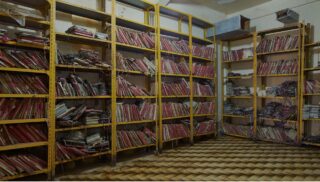
Rádio Libertação was founded in 1964 by the African Party for the Independence of Guinea and Cape Verde and became a defining voice of the anticolonial resistance. The station broadcast military and political information, conveyed ideological positions, and supported cultural expression. Its programming in Portuguese, Creole, and various regional languages made it a vital instrument of mobilisation. After the unilateral declaration of independence in 1973 and Portugal’s official recognition in 1974, Rádio Libertação moved into the premises of the former colonial state broadcaster in Bissau. This takeover marked the beginning of what would become, in 1975, the National Broadcaster of Guinea-Bissau (RDN) – today the country’s public broadcasting institution. Under state ownership, the RDN continued the broadcast practices of Rádio Libertação and became a central platform for political communication and cultural self-definition in independent Guinea-Bissau. Today, the RDN archive is divided into three main collections: recordings from the guerrilla broadcaster Rádio Libertação (until 1974), from the national broadcaster (from 1975 onward), and ethnomusicological recordings from the 1980s.
//
The Anticolonial Sound Archive: From Rádio Libertacão to the National Broadcaster of Guinea-Bissau
The Conservation and Restoration of New Media and Digital Information study programme is collaborating with the National Broadcasting Corporation of Guinea-Bissau to preserve unique, historically valuable sound recordings as part of the German Federal Foreign Office’s Cultural Preservation Programme:
.
Digitisation of the Rádio Libertacão Recordings, 2020–2024
Initiated by Rui Vilela’s dissertation project on the politics of listening in the liberation struggle of Guinea-Bissau – rooted in artistic research on the anticolonial sound archive and supported by an ongoing collaboration with the broadcasting institution since 2016 – a close cooperation emerged with its leadership and archival staff. Between 2020 and 2024, the project – led by Vilela in collaboration with Prof. Dr. Nadja Wallaszkovits – focused on the digitisation of audio recordings from the Rádio Libertação collection, particularly those dating from the second half of the liberation struggle against Portuguese colonial rule. The collection documents key aspects of the resistance, as well as diverse cultural expressions of the time. It includes speeches, news broadcasts, interviews, and music productions in Portuguese, Creole, and various regional languages. A significant part of the project involved the laborious restoration of heavily damaged magnetic tapes – a process requiring meticulous care, technical expertise, and specialised equipment.
//
.
.
Making further collections accessible (2025–2027, funded by the Federal Foreign Office)
The digitised recordings form the foundation for a second project phase, which will focus on additional sections of the archive – particularly materials from the immediate post-independence years and ethnomusicological collections from the 1980s. The first phase has demonstrated that technically demanding and contextually grounded digitisation can be successfully carried out on-site. It has also proven the effectiveness of institutional cooperation based on continuity, transparency and national responsibility. This initiative represents a strategic investment in Guinea-Bissau’s public infrastructure, yielding tangible results: the creation of new skilled jobs, enhanced technical autonomy for the RDN, and international recognition within professional networks. Beyond preservation, the project aims to establish sustainable conditions for the sovereign organisation, care and public accessibility of the country’s audiovisual heritage. To ensure long-term access, a publicly accessible, searchable catalogue will be released in 2025, based on a database developed in close cooperation with Guinean partners. It will enable structured access to the digitised holdings and reinforce the national institutions‘ role in managing this critical archival resource. Furthermore, all usage rights will remain exclusively with the RDN, ensuring that decisions on access and further use are made transparently and autonomously within national institutions.
//
.
.