Anti-graffiti protection for coated and uncoated metal surfaces in outdoor areas
Inhalt
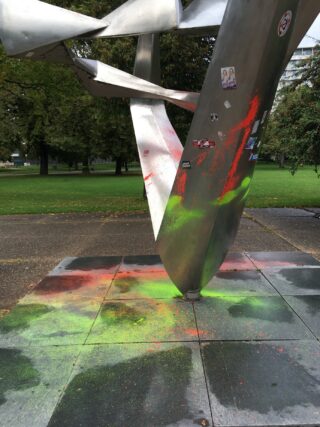
Conservators are responsible for the preservation of art and cultural heritage, which may be housed in the enclosed spaces of museums or archives, or may take the form of works of art or monuments in public spaces. The latter are particularly vulnerable to damage, such as that caused by graffiti. Spray paints and permanent markers can corrode original surfaces and alter them in such a way that these objects lose their visual impact and suffer physical damage. Efforts are therefore made to remove these substances. Various protective systems available on the market are designed to make it easier to remove traces of graffiti from surfaces. Protective coatings applied to listed buildings must meet specific requirements, such as protecting metals from corrosion, being reversible, and ensuring a long service life for the applied coatings.
To date, research has primarily focused on the protection of porous systems in the conservation of historic buildings, such as stone surfaces. Protective coatings on metal surfaces in outdoor environments, on the other hand, have received little attention to date. This research project addressed this gap and tested methods for protecting coated and uncoated metal surfaces in outdoor environments; these methods were designed not only to provide protection and ensure the long-term preservation of the objects, but also to meet the requirements of heritage conservation in terms of appearance and environmental sustainability. Through a series of tests involving various substrates, products and cleaning methods, the project determined how strategies for protection against unwanted graffiti tags can be developed and what factors need to be taken into account in the long term.
Staff
Project Assistants
research assistant and project coordinator (2022–2025)
student assistant (2023–2024)