Cracks filled with paint: damage or evidence of a particular painting technique?
Inhalt
During a five-month work placement at the Stedelijk Museum in Amsterdam, Chiara Schweizer gained a wide range of insights into the workings of the museum and the conservation of modern and contemporary art. As part of a project for her Master’s degree, she studied an impasto oil painting by the French artist Eugène Leroy, dated 1995.
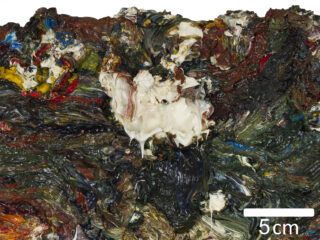
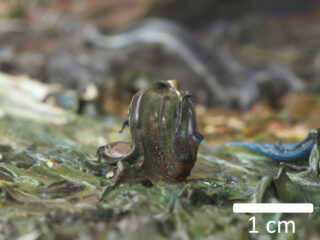
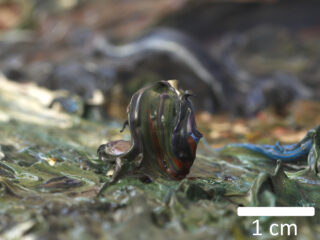
The paint layer, which was several centimetres thick (Fig. 1), posed a particular challenge when cleaning the surface (Figs. 2 and 3). Eight tears in the textile support prompted a closer examination of the painting.
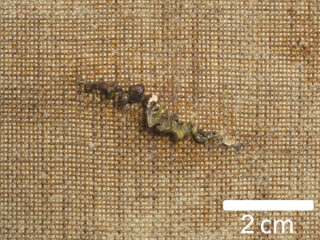
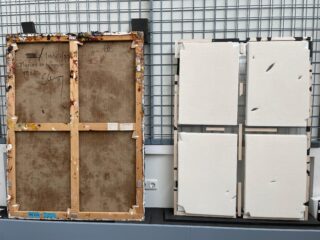
As some of the cracks had been filled with paint (Fig. 4), the question arose as to when they had formed and, consequently, whether these cracks were part of the painting’s creation process or subsequent damage. By comparing the current condition with early photographs of this and other paintings by Leroy, it was established that the cracks are attributable to the artist’s painting process and should therefore be preserved. Particularly for storage and transport, the painting should be supported by a individually adapted backing. Among other things, a pile fabric was used, which is attached to the backing and mounted in direct contact with the reverse of the painting (Fig. 5). Thanks to this backing, the painting can now once again be exhibited, transported and stored.
The project was made possible and supervised by the conservators Anne Schmid and Annegret Volk at the Stedelijk Museum in Amsterdam.