
Painting and sculpture conservation
Inhalt
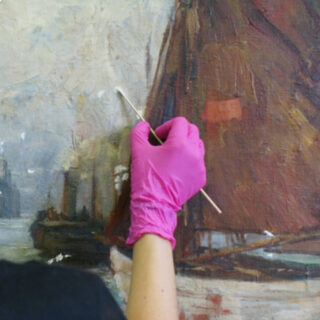
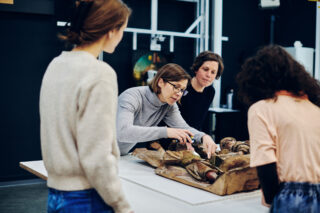
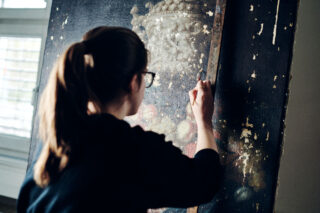
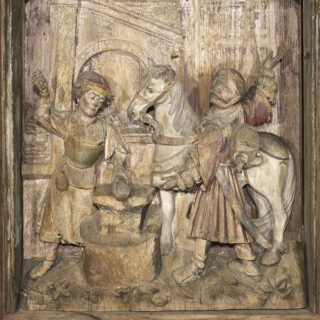
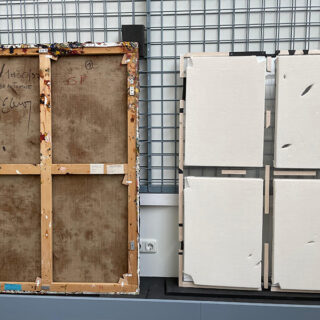
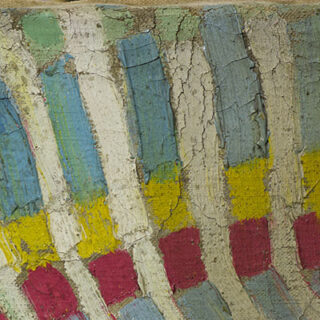
The focus of the degree programme in the Conservation and Restoration of Paintings and Polychrome Sculptures lies in the examination, conservation and restoration of easel paintings on various supports, as well as polychrome sculptures, with works ranging from early medieval to contemporary art being studied. A distinctive feature of the programme is the combination of painting and sculpture restoration. This proves particularly valuable in the case of, amongst other things, medieval altarpieces and church furnishings.
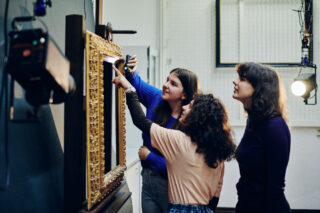
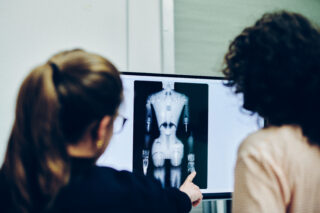
Close collaboration with the other restoration degree programmes at the ABK and cooperation with the Archaeometry Laboratory provide the ideal framework for students’ interdisciplinary projects. Furthermore, through interdisciplinary modules, students also gain an insight into the working methods of the other disciplines at the ABK Stuttgart (Fine Art, Design and Architecture).
The degree programme is one of the first of its kind in Germany and was established as early as 1977. It has excellent national and international networks and maintains numerous links with museums, heritage conservation organisations and private partners.
Course projects
Projects within the degree programme
Outline of the profession
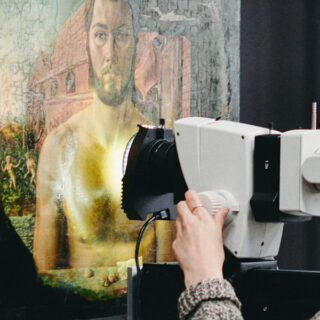
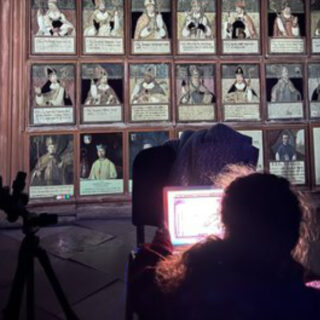
Conservators work to preserve works of art and cultural artifacts. By working on and with original works of art, they shoulder a great responsibility for passing on our cultural heritage. Every work of art has its own unique history, which can have many facets. Restorers aim to grasp and understand the complex historical, material and conceptual significance of the objects entrusted to them, adopting a holistic approach. Interdisciplinary collaboration is key to success here. That is why they regularly work alongside art historians, heritage conservationists, and specialists from the natural sciences and engineering.
A scientific assessment of the object in all its dimensions is a prerequisite for an appropriate restoration plan that justifies the necessary measures. Respect for the unique history of each object requires a bespoke, individual approach in each case. These measures are then implemented by conservators acting on their own responsibility. They work in museums, in the field of heritage conservation, or are self-employed on behalf of state, church or private clients. Increasingly, they also take on planning and coordination tasks, such as planning and coordinating larger restoration projects or overseeing exhibitions and loan schemes. They provide advice on matters of preventive conservation and thus help to improve the framework conditions for the long-term preservation of cultural heritage.
The opportunity to pursue a PhD means that Master’s graduates from the ABK Stuttgart also have a path into research and teaching.
Further information on this profession can be found on the website of the Association of Conservators (VdR).
Bachelor’s degree
Duration and degree
| Duration of study | Standard period of study 6 semesters |
|---|---|
| Degree | B.A. (Bachelor of Arts) |
| ECTS | 180 |
Course content
The Bachelor’s programme provides students with fundamental subject knowledge: through cross-disciplinary lectures and seminars, students learn the basic techniques of academic work, referencing and media literacy, whilst also acquiring a grounding in the natural sciences and the humanities.
The interdisciplinary curriculum is complemented by subject-specific lectures and seminars in the fields of materials science, art technology and conservation science. The six thematic areas are
- Paintings on textile supports
- Paintings on rigid supports and sculptures
- natural organic and inorganic binders
- Ground and paint layer structure, metal overlays
- Modern, synthetic materials
- Colouring agents
Bachelor’s thesis and final examination
The Bachelor’s programme concludes with a four-month Bachelor’s dissertation and a final examination, leading to the award of a Bachelor of Arts (B.A.), and corresponds to Level 6 of the ‘Professional Guidelines’ of the European Confederation of Conservator-Restorers Organisations (E.C.C.O.). ecco-eu.org
Upon passing the Bachelor’s degree examination, graduates are eligible for a place on a Master’s programme. The B.A. degree does not yet qualify graduates to practise their profession independently, which is why the M.A. degree is recommended.
Regulations
Master
Duration and degree
| Duration of study | Standard period of study 4 semesters |
|---|---|
| Degree | M.A. (Master of Arts) |
| ECTS | 120 |
Course content
The Master’s programme builds on the Bachelor’s programme in a sequential manner and specifically deepens the foundational knowledge acquired there, enabling you to gain the necessary professional expertise for a future career in which you will work independently. The Master’s programme is characterised by a wide range of options and a high degree of academic freedom: You can choose from a wide range of theoretical block modules – usually lasting one week – in the fields of materials science, archaeometry, art technology and conservation science, as well as modern artefacts and contemporary art, selecting those that interest you most and thereby developing your own specialist profile. A complete list of available modules can be found in the module handbook (see the ‘Regulations’ section).
The theoretical modules in the Master’s programme are also supplemented by a total of three major practical projects. Step by step, you will be enabled to develop concepts largely independently, based on a thorough technological and material analysis of the objects entrusted to you, and then to carry out these measures with increasing autonomy. International experience enriches the course and can be gained both through study placements at partner universities and through project work.
The semester project and Master’s thesis offer you the opportunity to carry out your first independent research projects. The choice of topic can be based on your academic interests and is therefore also an important step towards future specialisation. The M.A. degree from the ABK Stuttgart is highly regarded both in Germany and abroad. Our graduates work either independently or as employees in restoration workshops at museums and heritage conservation agencies, or at universities. Entry into the profession can be achieved, for example, through research traineeships in museums or via the contacts that students establish whilst still studying, during compulsory work placements, project work or semester and Master’s theses.
Master’s thesis
The Master’s programme culminates in a six-month Master’s thesis. Upon successful completion, students will have acquired skills in line with Level 7 of the E.C.C.O Professional Guidelines (ecco-eu.org). The M.A. degree qualifies you to practise the profession independently and to pursue a PhD.
Regulations
Master’s Theses
Master’s theses since 2014
2025
Link (née Khamneifar), Saskia. Archival research at the two German artists’ paint manufacturers, H. Schmincke & Co. and Dr. Fr. Schoenfeld & Co., by Lukas on changes to the formulations of binders used in artists’ oil paints between 1930 and 1955.
Mannsperger, Leontine. A comparison of methods for the artificial ageing of oil paintings based on mechanical and physical properties.
Schweizer, Chiara. The influence of relative humidity on the light sensitivity of pigments: measurements using a microfading tester.
2024
Knapp, Lotta. Analysis of a pilot study and experimental investigation into the suitability of microhardness measurement and dynamic differential calorimetry for characterising the mechanical and thermal properties of retouching paints.
Scheiger, Anna Laura. A contribution to the history of painting restoration – Prof. Rolf E. Straub’s teaching at the ABK Stuttgart (1963–1982), using the example of textile supports.
2023
Sachse, Julia Sonja. The hoof miracle of St. Eligius from 1520/30 – art technological examination of the paint layer of the shrine and relief and development of a conservation concept. –
Zamora Blaumann, Estefania Ezequiela. Harmful outgassing in glazed paintings.
Lorenz, Katja. Hyperspectral imaging for the separation and identification of binders in paintings.
Generating Representative Reference Spectra and Conducting Systematic Experiments on Versatile Mockups to Evaluate the Feasibility and Limitations of Utilizing Hyperspectral Imaging for Examining Binders on Paintings with a Focus on the Material Palette of Willi Baumeister.
2022
Backes, Hannah. The Pietà of Lienzingen. Arttechnological examination of the fragment of a late gothic sculpture“.
Opitz, Josephine. (The Study of Hard Boards used as painting supports in the early 20th century, with the Focus set on examining the Estate of Willi Baumeister. In the Period from 1935 to 1955.) –
Schmädecker, Maike. (Wax and water. Punic wax as a binding medium for antique roman ship paint.) . –
Schulz, Isabel. Protective Backings of Paintings on Canvas in Historical Buildings. Basic Principles, Current Survey and Microclimate Measurements of Various Systems in a Case Study. . –
2021
Heinz, Lisa. The Nothelfer retable. Merging and presentation of a fragmentary retable from 1491 from the Württemberg State Museum“. . –
Hartlieb, Eva. How does a canvas vibrate? – The influence of various parameters on the vibration behaviour of paintings on canvases. . –
Egeler, Anna. Glueing wood with methyl cellulose. Single-lap shear and 3-point bending tests on overlapping glued limewood specimens. . –
2020
Hack, Laura. Junges Mädchen auf dem Totenbett (1876) – art technological examination and development of a conservation concept for varnish treatment of a painting by Gabriel von Max.
Mitschke, Dennis. German or Dutch? – Investigation on the fabric covering and the coating layers of the Fokker D.VII at the “Deutsches Museum”, Munich. . –
2019
Daniel Gaasch. Cellulose ethers as adhesive for tear mending. Uniaxial tensile tests on linen canvas sample stripes with methylcellulose and hydroxypropyl methylcellulose. Published in Zeitschrift für Kunsttechnologie und Konservierung 35 (2022) Heft 1, S. 120-128. . –
Mareike Gerken. Two paintings by Ernst Ludwig Kirchner from the Kunsthalle Bremen – Studies on painting technique and consolidation of the matte oil paintings Bootshafen auf Fehmarn“ (1913) and Straßenszene bei Nacht (1925/27). . –
Stefanie Göltz. The Museums Conservators – Today. Capturing the professional self-image, viewing the professional activities and the presentation on the museum homepages of conservators in museums. . –
Larina Held. Paint Layer Issues on the Cubist Painting Man with Guitar (1918) by Pablo Picasso – Art Technological Examination and Development of a Conservation Concept.
Lea Rechenauer. Comparative Art Technological Examination of the St. Georg High Altars by the Sculptor Johann Baptist Straub in Bichl and München-Bogenhausen.
Published in: Rupert Karbacher, Lea Rechenauer: „Results of the examination of the high altar of St George in Munich-Bogenhausen“), in: Tracing the art of the Straub family. Auf den Spuren der Familie Straub Institute for the Protection of Cultural Heritage of Slovenia, Ljubljana, Matej Klemencic, Katra Meke, Ksenija Skaric (Hrsg.) Zagreb 2019, S. 99—109. – . –
2018
Jana Exner. (Up-to-date and informative – The Collection Kölle. Recording the state of preservation of a private collection from the 19th century.) . –
Christiane Kritzer. The pastel color market of the early 20th century.
Annika Maier. Studies of Hans Schäufelin’s painting technique.
Maria Markovska. Prevention through Cooperation? Possibilities for interdisciplinary cooperation on campus between various courses of studies of Conservation and Fine Art. . –
Jana Merseburg. A challenging task: Developing and applying a conservation treatment concept on a moveable object with a monchrom white surface by Hal Busse.
Stella Overmann. Classification of painting damages. Mechanical alterations and degradation phenomenas of the material. . –
Rika Pause. Synthetic Organic Pigments in Talens Oil Paint – in the first half of the 20th century.
2017
Anna Košar. St. Peter from the Šibenik Cathedral – Art technology in the context of Dalmatian history. . –
Sabrina Kunz. A reworked fragment from the Rubens workshop? Examination of painting technique and analysis of materials of a presumed lady’s portrait. . –
Pia Rösch. Hermann Sohn’s workshop and efflorescences on his paintings.
Nathalie Staaf. Alternative Lightweight Fillers from Microparticles in Conservation.
Published in Zeitschrift für Kunsttechnologie und Konservierung 31 (2017) Heft 2, S. 234–250.
2016
Ulrike Haußmann. Staining techniques for the localization of proteins and drying oils in paintings – Problems and limits of interpretation.
Fuhyi Kuo. Investigation of Paint Layer on Three Late Gothic Reliefs from Tyrolean State Museum.
Thuja Seidel. A reflection of the times. The portrait of Carl Friedrich Lessing painted by Carl Ferdinand Sohn (1856) in the original frame. Examination, conservation and restoration. . –
2015
Jill Kruzwicki. Nails – Fabrics – Monocrome Surface. Possibilities and Limitations of Conservation as Seen in an Artwork by Enrico Castellani. . –
Ilona Schwägerl. Glued and stitched. The Wings of the “Teinacher Lehrtafel“ and Alternatives for Tearmending on double-sided Canvas Paintings. . –
Johanna Stegmüller. Die Wandlung von Farbmaterie zum Farbgeist – The Basics of Rupprecht Geiger’s Painting Techniques. –
2014
Katharina Geffken. Infraredreflectography – Light emmitting Diodes as a multispectral Source of Radiation.
Elisabeth George. A Panel Cross (from 1500) – One of various objects found in St. Urban and Vitus in Neuhausen (Enzkreis). Technological examination, conservation and restoration. . –
Maja Rinck. Wax and Oil Crayons as a Material in Art.
Andrea von Hedenström. „Tudor, or not Tudor, that is the Question“. Authenticity of Art During the English Renaissance. A Technical and Art Historical Investigation into eleven Portraits from Audley End House . –
Jasmin Wollenhaupt (née Bauer). (Painting conservation on the edge. Iron induced degradation on tacking margins and the use of intermediate materials)
Published in Zeitschrift für Kunsttechnologie und Konservierung 35 (2022) Heft 1, S. 231-242. . –
Diploma theses 1977–2014
If the final theses have been published, a note to this effect will appear at the end of the relevant entry. Unpublished theses may be viewed at the Birkenwaldstraße Library by prior appointment. For enquiries, please contact the programme’s administrative office (see the ‘Contact’ section).
2014
Elisabeth Ursprung. Bronze powder. A forgotten art material from the Expressionist period.
2013
Lena Bühl. The conservation of painted PE and PVC films. Fragile paintings in the series “SIEV-X. On a case of increasingly restrictive refugee policy” by Dierk Schmidt . Published in Zeitschrift für Kunsttechnologie und Konservierung 29 (2015) Heft 2, S. 161–186.
Carolin Heinemann. Digital shearography for the condition assessment of paintings. Evaluation of the method and presentation of an analysis strategy for interpreting the phase images . Published in Zeitschrift für Kunsttechnologie und Konservierung 28 (2014) Heft 1, S. 51–64.
Bernadette Henke.
Kamila Korbela. The investigation and assessment of the structural problems in Edvard Munch’s paintings referring to two case studies from the 1910s.
2012
Meike Jockusch. Climate protection for the reverse side of paintings on textile supports – material analysis in the context of heritage conservation using simulation.
Liliane Metz. An art-technological analysis of the Barbara Altar by Jörg Ratgeb.
Ramona Roth.
Manuela Wiesend. Whimsical and misunderstood. The technology and materials of Tyrolean spider’s-web painting .
Published in Zeitschrift für Kunsttechnologie und Konservierung 28 (2014) Heft 1, S. 65–78.
Annegret Volk. Approaches towards the surface cleaning of water sensitive oil paints with aqueous methods.
2011
Patricia Dornstädter. The Family Tree of the Counts of Montfort – Art-technological Analysis, Conservation and Presentation.
Ewa Kruppa. Colour! Colour! Colour! Vast, bold, energetic, sharply rendered (…) Observations on painting techniques in works by Otto Modersohn and Paula Modersohn-Becker, set against the backdrop of the artists’ own statements regarding the use of tempera paints .
Julia Langenbacher. Technology, ageing and restoration of polyurethane elastomers, using the sculpture *Wurfeisen und Zwille* (Hafenstraße design), 1990, by Olaf Metzel, as an example.
Magdalena Schlesinger. The Maulbronn Madonna. A conservation-scientific examination of a contaminated sculpture. .
Amelie Stange. Polyvinyl acetate dispersions as binders in layered painting. Forms of application and ageing properties of Caparol® binders and other products in paintings from the 1950s and 1960s. .
2010
Christine Dörr. A study of red underdrawings in 14th- and 15th-century panel and canvas paintings. .
Hanna Gräbeldinger. Laser ablation – The removal of Dammar using an ultrashort-pulse laser. A successful alternative?
Laura Katharina Kapp. The Institute of Painting Technology at the State Academy of Fine Arts in Stuttgart.
Tilly Laaser. A study of the penetration behaviour of adhesive mixtures in the conservation of canvas paintings, using methylcellulose-glutin glue mixtures as an example. Published in: Tilly Laaser, Karolina Soppa, Christoph Krekel: Lokalisierung von Konsolidierungsmitteln in Gemälden durch Fluoreszenzmarkierung (Teil II). In: Zeitschrift für Kunsttechnologie und Konservierung, 2/2013, S. 218–228.
Cäcilia von Merveldt. 19th-century panoramic painting, illustrated by the panorama ‘The Battle of Villiers and Champigny’ by Prof. Louis Braun, commissioned by the City of Stuttgart in 1889.
Balthazar Soulier. A historical and material-analytical study of lute varnishes from the Italian Renaissance.
2009
Katrin Bettray. A colourfully painted door from a Moroccan town house.
Jamal Al Jaber. The Wooden Kishk in Ottoman Cities.
Lena Knecht. Jute as a textile support – studies on its ageing.
Wolff-Hartwig Lipinski. Investigations into the moisture-related physical behaviour of paintings on textile supports under biaxial strain.
Published as Volume 26 (2010) of the ‘Weiße Reihe’ published by the Institute of Museum Studies at the State Academy of Fine Arts, Stuttgart. Anton Siegl Publishers, Munich. ISBN 978-3-935643-48-1.
Anne Marguerite Steinbeis.A technical art analysis of Stefan Lochner and 15th-century Old Cologne painting, based on four panels from the Bavarian State Art Collections.
Melanie Siri Wiegand. Max Pechstein’s Palau Triptych – A Study of Painting Techniques and the History of its Restoration.
2007
Kerstin Budde. The creation of new versions of original works in modern and contemporary art – taking a work by Reiner Ruthenbeck as an example.
Stephanie Dietz. The ‘Heller Altar’ by Albrecht Dürer in Frankfurt.
Niclas Hein. 3D white-light strip projection scanner for investigating transport damage to sculptures.
Published in Zeitschrift für Kunsttechnologie und Konservierung 24 (2010) Heft 1, S. 146–159.
Kristel Leivo. Attempts to reconstruct the former Steinbach synagogue.
Wibke Neugebauer. Development of a DNA microarray for the identification of moulds on works of art and cultural artefacts.
Published in Studies in Conservation 55 (2010) Heft 4, S. 258–273.
2006
Stella Eichner.
Karin Geißinger. Glue made from pike and carp swim bladders – a possible alternative to sturgeon glue?
Published in Zeitschrift für Kunsttechnologie und Konservierung 21 (2007) Heft 2, S. 317–329.
Julika Hatscher. Art-historical studies of sacral sculptures of the Historicism movement, taking into account contemporary specialist literature.
Natalie Kurz. Research into cold-induced damage to contemporary wax-based paintings.
Sophie Richter. Technological investigations and surveys of the two side altars by Jakob Mühlholzer in the Hergottskirche in Creglingen.
Anita Schink. Comparative studies on the use of microfibre cloths in the cleaning of painting surfaces.
Karolina Soppa. Investigation into the penetration behaviour of polyacrylic acid esters during the consolidation of canvas paintings. Labelling of Degalan P 550/PQ 611 (formerly Plexisol P 550 and Plexigum PQ 611) with the fluorochrome fluorescein isothiocyanate (FITC) . Published in: Karolina Soppa, Tilly Laaser, Christoph Krekel: Lokalisierung von Konsolidierungsmitteln in Gemälden durch Fluoreszenzmarkierung (Teil I). In: Zeitschrift für Kunsttechnologie und Konservierung, 2/2013, S. 195-217.
2005
Anna Bonewitz. Fungicide solutions in painting restoration.
Kerstin Binzer. Mould growth on acrylic paint layers.
Sybille Nöth. On the penetration behaviour of adhesives during consolidation – Labelling adhesives relevant to the setting process using the fluorochrome fluorescein isothiocyanate.
2004
Christina von Buchholtz. Brazilian Baroque sculptures from Minas Gerais – An overview of the materials used and the influence of Portuguese source texts.
Franziska Herzog. Hyperrealistic sculptures by Ron Mueck – techniques, materials, and aspects of conservation and restoration, with a focus on silicone rubber and glass-fibre-reinforced polyester.
Dörte Klatte. The potential and limitations of alkali-PEG solutions for removing aged, oil-based varnishes and overpainting.
Anke Klusmeier. ‘Von aldem, fulen airclar’ – A collection of medieval recipes for the use of egg white and reflections on the use of rotten egg white in the field of art technology.
Anne Künzig. Textile image carriers made of paper. An example from Mir Iskusstva .
Published in Zeitschrift für Kunsttechnologie und Konservierung 29 (2015) Heft 2, S. 255–276.
Kathrin Maushardt. Methylcellulose as a binder for fixing the paint layer on canvas paintings.
Published in: Kathrin Sindlinger-Maushardt und Karin Petersen: Methylcellulose als Klebemittel für die Malschichtfestigung auf Leinwandbildern-Untersuchungen zur Klebkraft und zur mikrobiellen Resistenz, Zeitschrift für Kunsttechnologie und Konservierung 21 (2007) Heft 2, S. 371-382.
Ina Sahl. The Herrenberg Altar by Jörg Ratgeb at the Staatsgalerie Stuttgart – An art-technological study.
Barbara Springmann. Possibilities and limitations in optimising X-ray images for the examination of paintings.
Carolin Wilhelm. A Series of Reliefs. A technological study and reconstruction of the reproduction technique used in a selected series of 15th-century clay and papier-mâché reliefs .
Susanne Wufka. Fibre identification on textile painting supports.
2003
Christine Götz.The ‘miraculous image’ from the Protestant parish church in Bad Wimpfen.
Berenice Gührig. The design of cloak trims in Gothic depictions of the Virgin Mary in southern Germany. An illustrative overview based on sculptures in settings and panel paintings. .
Michaela Heckel. On the suitability of hydrocarbon resins for increasing the strength of degraded timber.
Marie Katharina Hinrichs. Edward Kienholz. THE PORTABLE WAR MEMORIAL. An introduction to the artist and his work. .
Jutta Multhaupt. The Staging of Faith: A Study of a Baroque Group of Figures. .
Kerstin Schuld. Icons of the Christian East. A study of the painting techniques used in 17th- and 18th-century devotional images from Lebanon and Syria. .
2002
Nadja Anhorn. Max Beckmann’s painting technique – illustrated by his unfinished Resurrection.
Gudrun Bischoff. THE MAYERNE MANUSCRIPT. Formulas for materials, painting techniques and the restoration of paintings .
Published as Volume 20 (2004) in the ‘Weiße Reihe’ series by the Institute of Museum Studies at the State Academy of Fine Arts, Stuttgart. Anton Siegl Publishers, Munich. ISBN 3-935643-10-1.
Claudia Luckenbach. The Holy Sepulchre of Altshausen.
2001
Gloria von Hoensbroch. De secretis pigmentatiorium. Translation, research, comparison and commentary on a collection of recipes from the late sixteenth century. .
Frederike Röper. Parchment as a support for oil painting.
2000
Kerstin Bucher. Gaping cracks – Investigations into the elongation of shrunken crack regions.
Tobias Haupt. Preparation of sturgeon glue. Effect of preparation temperature and time on viscosity, gelling behaviour and molecular weight .
Published in Zeitschrift für Kunsttechnologie und Konservierung 18 (2004) Heft 2, S. 318–328.
Ulrike Hügle. The Munich Puppet Theatre. A study of its history, materials, manufacturing techniques and theatrical context. .
Saskia Mertens. The Gothic altar crucifix from the Protestant Church of St Cyriakus in Bönnigheim.
Verena Müller. On Paul Uwe Dreyer’s painting technique. An interview with an artist about his work. .
Nadja Sarodnick. Wooden Egyptian grave goods from the Badisches Landesmuseum in Karlsruhe.
Heide Skowranek. Screen printing in modern art – a study of the development, technology and application of a printmaking process.
Sigrun Thiel. Crystallisation on portrait miniatures on ivory.
Published in Restauratorenblätter 21 (2000) and Zeitschrift für Kunsttechnologie und Konservierung (2002).
1999
Tilmann Daiber. The ‘Stuppach Madonna’ by Matthias Grünewald – A study of painting technique.
Moya Schönberg. The Great Friedberg Altarpiece at the Hessian State Museum in Darmstadt.
Iris Winkelmeyer. Contemporary art made from soft polyurethane foam. Creation – Ageing – Restoration – Storage .
Published as Volume 17 (2000) in the ‘Weiße Reihe’ series by the Institute of Museum Studies at the State Academy of Fine Arts, Stuttgart. Anton Siegl Publishers, Munich. ISBN 3-931485-38-2 (CD).
1998
Bettina Achsel. The Japanese hanging scroll painting / Materials and painting techniques.
Published as Volume 18 (2001) in the ‘Weiße Reihe’ series by the Institute of Museum Studies at the State Academy of Fine Arts, Stuttgart. Anton Siegl Publishers, Munich. ISBN 3-931485-43-9
Kirsten Hinderer. Studies on polycyclohexanone resins as a varnish material in the restoration of paintings: their history and use in Germany.
Barbara Sommermeyer. Consolidation of matt, powdery paint layers in modern art / Application of ultrasonically atomised consolidating agents.
Caroline Springob. Stärkekleister als Verdickungsmittel von Störleim zur Malschichtfestigung. Untersuchungen im Vergleich mit zwei Cellulosederivaten .
Publiziert in Zeitschrift für Kunsttechnologie und Konservierung 15 (2001) Heft 1, S.111–132.
Susanne Voigt. Paul Hermann Hübner (1895–1981) Ein Restaurator und seine Zeit.
Publiziert in Zeitschrift für Kunsttechnologie und Konservierung 18 (2004) Heft 2, S. 225–260.
Eva Wenders. Dammar als Gemäldefirnis/Untersuchungen zu Löslichkeit, Glanz und Rauhigkeit.
Publiziert in Firnis: Material, Ästhetik, Geschichte: Internationales Kolloquium Braunschweig 15.–17. Juni 1998 (AdR Schriftenreihe zur Restaurierung und Grabungstechnik 1999. Hrsg: Anne Harmsen), S. 152–160.
1997
Henrieke Bierbrodt. Papermarchereliefs an deutschen Objekten des 16. Jahrhunderts.
Daniela Hedinger. Rissvernähung am Gemälde.
Publiziert als Band 15 aus der Weißen Reihe am Institut für Museumskunde an der Staatlichen Akademie der Bildenden Künste Stuttgart.
Annette Klöpfer. Der Gemäldezyklus der Lauffener Regiswinda-Legende.
Renate Kühnen. Der Ortenberger Altar aus dem Hessischen Landesmuseum Darmstadt.
Katja van Wetten. Vom Umgang mit Hochspannungs-Leuchtröhren an Kunstobjekten.
Publiziert in Zeitschrift für Kunsttechnologie und Konservierung 13 (1999) Heft 1, S. 103–139.
1996
Stefanie Bosch. Restauratorische Behandlungsmöglichkeiten matter Azuritpartien in der Faß- und Tafelmalerei.
Sylvia Krauß. Grundlagen der Retuschentechnik.
Gaby Theurer. Englisches Craquelee. Frühschwundrisse bei Ölgemälden .
Publiziert in Zeitschrift für Kunsttechnologie und Konservierung 12 (1998) Heft 1, S. 33–98.
Gundula Tutt. Interieur-Bühnenbilder aus dem Schloßtheater Ludwigsburg.
1995
Anja Damaschke. Lederskulpturen um 1400.
Publiziert in Zeitschrift für Kunsttechnologie und Konservierung 12 (1998) Heft 1 S. 118–133.
Natalie Eschweiler. Hygrometer im Gebrauch des Restaurators.
Annette Kollmann. Untersuchungen zur Oberflächenbearbeitung und farbige Gestaltung von süddeutschen Alabasterskulpturen des 15. Jahrhunderts.
Christine Reiner. Sicherung von Kunst- und Kulturgut gegen Diebstahl unter konservatorischen, ästhetischen und sicherheitseffektiven Gesichtspunkte.
Silke Schick. Braunschweiger Lack.
1994
Bele Bätz. Der Freiburger Maler Joseph Hermann (1732–1811) und seine Nachahmungen spätgotischer Tafelbilder mit einem Katalog seiner bisher bekannten Gemälde.
Silvia Castro-Greune. Eine Studie zu beidseitig bemalten Leinwandgemälden und deren restauratorische Bearbeitung.
Ursula Haller. Studien zur Herstellung und Anwendung von Lösungsmitteln-Gelen, -Pasten und -Kompressen in der Restaurierung.
Publiziert als Band 11 (1995) aus der Weißen Reihe am Institut für Museumskunde an der Staatlichen Akademie der Bildenden Künste Stuttgart.
Peter Most. Studien zur pastosen Öl- und Acrylmalerei in der zeitgenössischen Kunst.
Daniela Siessegger. Barocke Klosterarbeiten. Technologische Untersuchungen an ausgewählten Beispielen aus dem süddeutschen Raum .
1993
Christiane Ehrenforth. Aquarell- und Gouachefarben. Beiträge zu Materialzusammensetzung, Veränderung, Schäden .
Publiziert als Band 10 (1994) aus der Weißen Reihe am Institut für Museumskunde an der Staatlichen Akademie der Bildenden Künste Stuttgart.
Markus Freitag. Das Cismarer Hochaltarretabel. Eine Untersuchung zu Form, Werkstoffen und Arbeitstechniken .
Publiziert in Zeitschrift für Kunsttechnologie und Konservierung 9 (1995) Heft 2, S. 257–285.
Sabine Hofmeister. Der beabsichtigte Zufall und die gewollten Veränderungen im malerischen Werk Sigmar Polkes.
Publiziert in Zeitschrift für Kunsttechnologie und Konservierung 9 (1995) Heft 1, S. 50–77.
Felicitas Klein. Die Verwendung von Tageleuchtfarben in der modernen Kunst am Beispiel von Rupprecht Geiger, Kuno Gonschior und Siegfried Cremer.
Publiziert in Zeitschrift für Kunsttechnologie und Konservierung 9 (1995) Heft 2, S. 349–365.
Eleonore Lang. Sgraffito in der Tafel- und Fassmalerei – Geschichtlicher Überblick, Technologie – Anwendungsbeispiel.
Corina Nisse. Acrylglas als künstlerisches Medium.
Dorothee Simmert. Acrylharzkünstlerfarben. Studien zu einem Malmaterial des 20. Jahrhunderts .
Publiziert in Zeitschrift für Kunsttechnologie und Konservierung 9 (1995) Heft 1, S. 78–105.
1992
Bettina Gilsa. Harzseifen zur Firnisabnahme.
Publiziert in Zeitschrift für Kunsttechnologie und Konservierung 5 (1991) Heft 1, S. 48–58.
Verena Graf. Das „Silberaltärchen“ aus der St.Andreaskirche in Weißenburg.
Monika Kneer. Nahrungsmittel als künstlerischer Werkstoff bei Dieter Roth.
Annette Schulz. Gipsplastiken. Geschichte, Materialkunde, Reinigung von ungefassten Gispoberflächen .
Sonja Seidel. Die „Curieuse Kunst= und Werck=Schul“.
1991
Monika Bartsch. Der Firnis als Schlußüberzug auf Tafel- und Leinwandgemälden. Ein Beitrag zur Entwicklungsgeschichte des Gemäldefirnisses von den Anfängen bis zum Ende des 19. Jahrhunderts .
Maike Behrends. Zur Verwendung heterogener Materialien im Werk von Joseph Beuys. Bedeutung – Verarbeitung – Konservierung .
Manfred König. Das heilige Grab im Hochaltar der Studienkirche in Dillingen.
Bärbel Otterbeck. Collage als Sonderform im Materialgefüge der bildenden Kunst des 20. Jahrhunderts.
Rainer Preis. Der Hochaltar der ehemaligen Klosterkirche von Karthaus-Prüll in Regensburg-Eine technologische Untersuchung.
Annette Scholtka. Die maltechnische Anweisung des Theophilus Presbyter und ihre Gegenüberstellung mit naturwissenschaftlichen Untersuchungsbefunden.
Publiziert in Zeitschrift für Kunsttechnologie und Konservierung 6 (1992) Heft 1, S. 1–53.
Lulu Welther. Die Geschichte und Herstellung des abendländischen Künstlerpinsels.
Publiziert als Band 8 (1992) aus der Weißen Reihe am Institut für Museumskunde an der Staatlichen Akademie der Bildenden Künste Stuttgart.
Isabell Zillich. Über das Begradigen von Holztafelgemälden.
1990
Regina Borth. Technologische Untersuchung zur „Türkenbeute“ aus dem Badischen Landesmuseum Karlsruhe.
Susanne Fischer und Christina Meyer-Cantinho Pereira. Verzierungstechniken in der Faß- und Tafelmalerei der Hoch- und Spätgotik.
Anna-Esther Lubinus. Anselm Kiefer- Anmerkungen zur Technologie und Ideologie eines zeitgenössischen Künstlers.
Wolfgang Schütz. Sikkative in der Ölmalerei des 19. Jahrhunderts.
1989
Felix Muhle. Der Kilchberger Altar. Untersuchungen zur Mal- und Faßtechnik der Zeitblomwerkstatt .
Jan Schmitt und Peter Vogel. Der Hochaltar der Schloßkirche in Rastatt.
Publiziert in der Weißen Reihe des Institut für Museumskunde an der Staatlichen Akademie der Bildenden Künste Stuttgart. Band 7, 1991.
Mechthild Schulze-Zumloh. Eine Sammlung von Malmaterialien aus dem frühen 19 Jahrhundert.
1988
Petra Brunner. Der Rückseitenschutz von Gemälden.
Publiziert unter Petra Achternkamp in Zeitschrift für Kunsttechnologie und Konservierung 5 (1991) Heft 1, S. 17–47.
Michaela Burek. Der Fiesole-Altar im Domschatz zu Hildesheim.
Publiziert als Band 5 (1989) aus der Weißen Reihe am Institut für Museumskunde an der Staatlichen Akademie der Bildenden Künste Stuttgart.
Susanne Rath. Untersuchung von zwei Engelsskulpturen aus dem Thalheimer Altar um 1515.
Sybille Schmitt. Zur Regenerierung von Gemäldefirnissen.
Publiziert in Zeitschrift für Kunsttechnologie und Konservierung 4 (1990) Heft 1, S. 30–77.
Peter Wolf. Zur Fabrikation von Harzölfarben.
1987
Ursula Beerhorst. Studien zur Maltechnik von Willi Baumeister.
Publiziert in Zeitschrift für Kunsttechnologie und Konservierung 6 (1992) Heft 1, S. 55–80.
Karl-Friedrich Bergmeier. Ein Unterdrucktisch. Entwicklung, Konstruktion, Bau .
Corinna Gramatke. Fünf europäische Faltfächer des Rokoko.
Jutta Minor. Studien zur europäischen und ostasiatischen Lacktechnologie. Eine Gegenüberstellung .
1986
Jens Baudisch und Anna Barbara Lorenzer. Studien zur Maltechnik von Otto Dix.
Publiziert in Zeitschrift für Kunsttechnologie und Konservierung 3 (1989) Heft 2, S. 321–362 und 3 (1989) Heft 1, S. 113–148.
Bettina Grusenmeyer. Studien zur Maltechnik von Oskar Schlemmer.
Rosa-Maria Pitta. Das Teatrum sacrum des ehemaligen Augustiner-Chorherrenstiftes zu Dießen am Ammersee.
Hans Portsteffen. Ein ägyptisches Grabtuch aus dem 1. Jh. n. Chr .
Publiziert in Zeitschrift für Kunsttechnologie und Konservierung 4 (1990) Heft 1, S. 77–89.
1985
Hans Becker. Berliner Blau.
Hans Cabanis. Ägyptische Mumienporträts.
Beatrix Haaf. Industriell vorgrundierte Malleinen. Beiträge zur Entwicklungs-, Handels- und Materialgeschichte .
Publiziert in Zeitschrift für Kunsttechnologie und Konservierung 1 (1987) Heft 2, S. 7–71.
Christoph Müller. Atelier/Werkstatt-Einrichtung. Anforderungen-Angebot-Anregungen .
Inken Stößel. Rote Farblacke in der Malerei.
Publiziert als Band 1 (1986) aus der Weißen Reihe am Institut für Museumskunde an der Staatlichen Akademie der Bildenden Künste Stuttgart.
Beate Zumkley. Das Weseler Gerichtsbild „Die Eideleistung“ von Derick Baegert.
1984
Andreas Menrad. Farbe und Architektur im frühen 20. Jahrhundert.
Ursula Tenge-Rietberg. Holzuntersuchungen an schwäbisch-allemanischen Skulpturen, 12. Jahrhundert bis 1460.
Publiziert als Band 3 (1987) aus der Weißen Reihe am Institut für Museumskunde an der Staatlichen Akademie der Bildenden Künste Stuttgart.
Ute Hack und Caroline Walter. Der Herz-Jesu-Altar aus Ehningen-Gammerschwan.
Birgit Linnhof. Metallauflagen und Farbafassungen auf Leder.
Babette Hartwieg. Drei gefasste Holzskulpturen vom Ende des 13. Jahrhunderts im Kloster Wienhausen.
Publiziert in Zeitschrift für Kunsttechnologie und Konservierung 2 (1988) Heft 2 S. 187–262.
Birgit Kurz. Die mechanischen Figuren des C. J. Tschuggmall im Münchner Stadtmuseum.
Publiziert in Zeitschrift für Kunsttechnologie und Konservierung 4 (1990) Heft 2, S. 165–192.
1983
Ursula Heiduk-Vrana. Drei Schatullen aus dem Diözesanmuseum Lerida – Ein Beitrag zu mittelalterlichen Verziertechniken.
Wolfgang Hansmann. Ein Spätrenaissance-Altar aus Rhynen (Kr. Unna) von 1623. Gemälde und Fassung signiert: Henr.Strothman pictor. Technologische Untersuchung .
Eva-Maria Popp. Der Georgsaltar aus Scharenstetten (zur Mal- und Fasstechnik eines Altars aus dem Multscher-Umkreis).
Barbara Wiemers. Historische und moderne Überlegungen zur Festigung und Malschichten.
1982
Gloria Benner. Der Marienschrein aus Schwarzenberg (1497) im Württembergischen Landesmuseum Stuttgart – eine technologische Untersuchung.
Ursula Fuhrer. Klimaprobleme im Heimatmuseum dargestellt am Beispiel des Königsbronner Klosterhofs in Reutlingen.
Volker Schaible. Studien zur Gemäldeübertragung als „Restauriermethode“ unter besonderer Berücksichtigung französischer Quellen.
Publiziert in Maltechnik Restauro 89 (1983) Heft 2 S. 96–129.
Irmgard Schnell. Zur Problematik der Restaurierung von Gnadenbildern, dargestellt am Beispiel des Villinger Nägelinkreuzes.
Publiziert im Verlag der Stadt Villingen-Schwenningen 1987.
1981
Ruth Baier. Die Laser-Mikrospektralanalyse und ihre Anwendung in der Archäometrie.
Werner Koch. Technologische Untersuchungen hölzerner Bildträger von Gemälden der Staatlichen Kunsthalle Karlsruhe.
Ulrich Schießl. Über unedle Blattmetalle und Metallpulver im 18. Jahrhundert (Studien zu ihrer Herstellung und Anwendung in der süddeutschen Staffierkunst anhand technischem Quellenmaterials und analytischer Belege).
Gabriele Schmalhofer. Die Technik der Miniaturmalerei nach einer französischen Quellenschrift des 17. Jahrhunderts (Traite de Mignature des C. B.(Claude Boutet, 1672, Paris).
Publiziert als Band 6 (1990) aus der Weißen Reihe am Institut für Museumskunde an der Staatlichen Akademie der Bildenden Künste Stuttgart.
Monika Urbancyk. Unterzeichnung in der Tafelmalerei des 15. u. 16. Jahrhunderts – Ein Beitrag zur naturwissenschaftlichen Gemäldeuntersuchung mit Hilfe Infrarotstrahlen, dargestellt an Beispielen aus der Staatlichen Kunsthalle Karlsruhe .
Thomas Wieck. Glas als Bildträger. Historische Techniken und ihre Anwendung ohne Berücksichtigung von Schmelzverfahren .
1980
Almuth Hase. Vergleichende technologische, ikonografische und stilkritische Untersuchungen von Malerei an den Vorder- und Rückseiten einiger Altarschreine des 15. und frühen 16. Jhs. aus dem süddeutschen Raum .
Birgitt Löffler. Möglichkeiten der Retusche in der Wand- und Gewölbemalerei. Ein Beitrag zur Auseinandersetzung mit dem Problem der Retusch .
Hildegard Willers. Herstellung von tierischem Leim und seine Verwendung im Bereich der Tafel- und Fassmalerei nach Angaben deutschsprachiger Quellenliteratur des 16. bis zur Mitte des 19. Jhs.
Publiziert als Band 2 (1986) aus der Weißen Reihe am Institut für Museumskunde an der Staatlichen Akademie der Bildenden Künste Stuttgart.
1979
Friederike Ellwanger. Herstellung und Verwendung künstlicher grüner und blauer Kupferpigmente in der Malerei (mit Ausnahme arsenhaltiger Pigmente und Grünspan).
Publiziert als Band 4 (1988) aus der Weißen Reihe am Institut für Museumskunde an der Staatlichen Akademie der Bildenden Künste Stuttgart.
Angelica Grunwald. Zur Ikonenmalerei des Künstlerdorfes Palech und verwandter Werkstätten im 18. u. 19. Jh. Eine maltechnische Studie .
Anne Houseworth-Massing. F ranzösische Handschriften des 17. u. 18. Jhs. über Maltechnik aus der British Museum Library und der Victoria & Albert Museum Library in London .
Barbara Klempan. Ein Beitrag zur Entwicklungsgeschichte der Keilrahmen am Staffelbild.
1977
Erwin Emmerling. Über weiße Fassungen.
John Farnsworth. Anwendung der Metallbildträger in der europäischen Malerei.
Beatrix Graf. Zur Pastellmalerei.
Brigitte Hecht. Betrachtungen über Pressbrokate sowie Rekonstruktionsversuche unter besonderer Berücksichtigung des sog. Tegernseer Manuskripts. Publiziert in Maltechnik Restauro 86 (1980) Heft 1, S. 22–49.
Christina Hermann. Ein Beitrag zur Geschichte und Technik der Wismutmalerei.
Andrea Kleberger. Oberflächenbearbeitung von Retabelskulpturen Tilman Riemenschneiders im Vergleich zu Strukturierungsarten in der spätgotischen Fassmalerei. Ein Beitrag zum Problem der sogenannten „ungefassten“ Holzskulptur .
Adelheid Wiesmann. Über Jugendstilrahmen.
Research
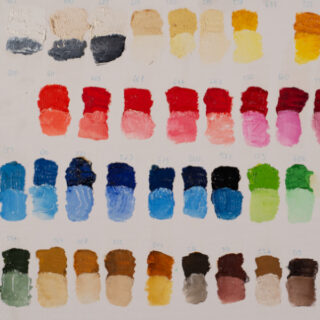
The degree programme is regularly involved in a variety of research projects in the fields of art technology and conservation science, and has an excellent network of contacts both at home and abroad.
Doctoral programme
ABK Stuttgart has been offering doctoral programmes since 2002. It provides graduates of ABK Stuttgart and other universities with the opportunity, following completion of their Master’s thesis, to devote themselves to a multi-year research project and to make original contributions to the still nascent but dynamically developing field of conservation science.
Anyone wishing to pursue an academic career following their Master’s degree has the opportunity to undertake a PhD at the ABK in the Conservation and Restoration of Paintings and Polychrome Sculptures programme. If you are interested in pursuing such a PhD, please contact the programme director.
The PhD regulations and further information on the PhD process, funding opportunities and current and completed PhD projects can be found under ‘Doctoral programme’.
Ongoing PhD projects
Elisabeth Fugmann: The influence of ancient encaustic painting on wax-painting techniques in easel painting of the late 19th and early 20th centuries (Prof. Dr. Wibke Neugebauer)